What is Calligraphy
Calligraphy & Chinese Characters
Chinese characters trace their origins back to the oracle bone inscriptions of ancient China. Having evolved through dynasty after dynasty, they remain the world's only logographic writing system still in widespread use today, and every single character carries layers of meaning that have accumulated over thousands of years. Calligraphy grew out of this writing system — indeed, those who mastered the reading and carving of oracle bone inscriptions during the Shang and Zhou dynasties could well be called the earliest "calligraphers." As writing tools advanced from oracle bones and bamboo slips to paper, more and more scholars came to prize calligraphy, and it gradually became a way of expressing personal cultivation and artistic refinement. Writing that follows rules, rests on principles, and rewards appreciation is what truly earns the name of "calligraphy art" — proof that calligraphy stands as a genuinely distinctive art form within Chinese culture.
Over the course of several thousand years, Chinese characters gradually evolved from pictographic forms into more abstract ones, and through the interpretations of calligraphers across the ages they eventually settled into five major scripts: Seal, Clerical, Regular, Running, and Cursive.
Seal Script
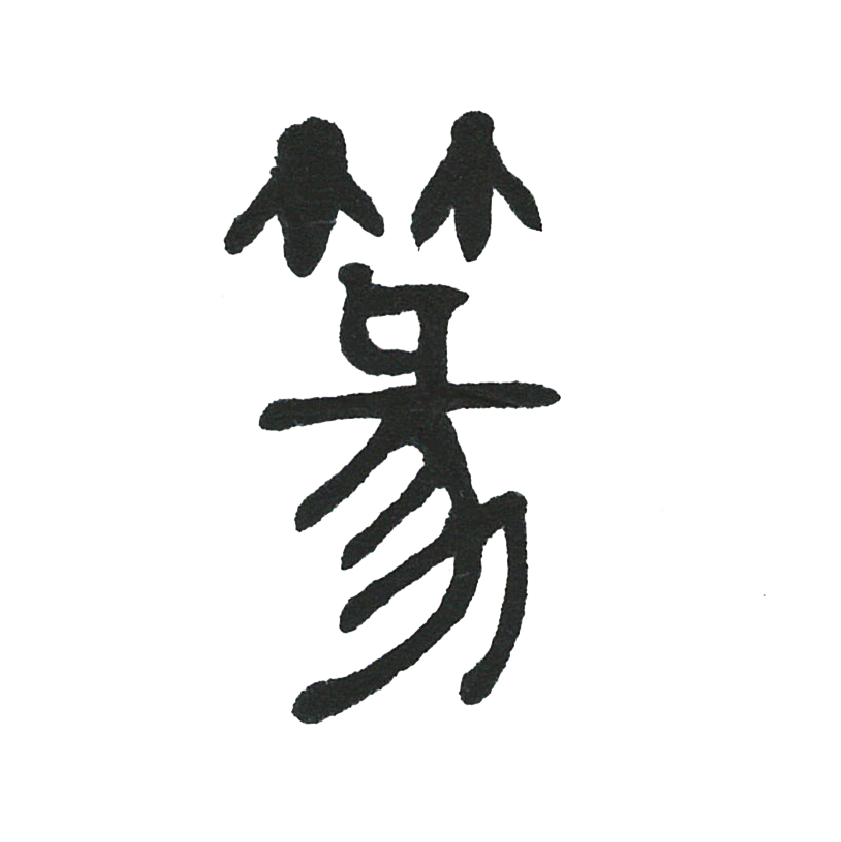
Seal script is the oldest systematically organized Chinese script, having evolved from pictographic characters into the forms that were carved or written on bamboo slips. In the pre-Qin era these scripts were collectively known as "Greater Seal" (encompassing the oracle bone and bronze inscriptions), while "Lesser Seal" became the official script after Qin unified China — an achievement traditionally credited to the prime minister, Li Si.
Seal script employs a single brush technique — the centered tip — which makes it both the root and the endpoint of every calligraphy line, and it is for this reason that it is often called the "soul" of the art. It prizes symmetry, balance, distribution, and uprightness. Although it is rarely used today, a careful look reveals the wisdom of the ancients, who built their characters from real objects and scenes, laying the foundation for the written culture that followed.
Clerical Script
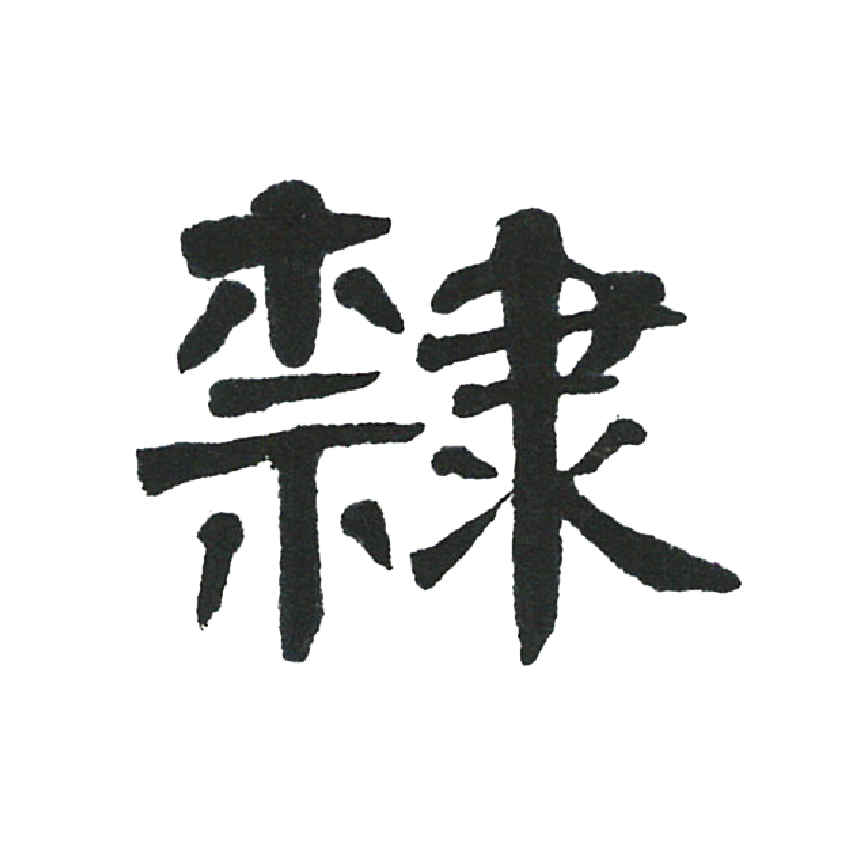
Clerical script evolved out of seal script, with its early forms appearing in the late Qin dynasty and dramatically speeding up the act of writing. It reached its peak in the Eastern Han dynasty, producing many distinctive styles — among them the archaic, square-brushed "Zhang Qian Stele" and the elegant, round-brushed "Cao Quan Stele."
Clerical script characters are typically flat and broad, resembling a turtle's shell, with the signature "silkworm head and goose tail" brushwork. Their graceful, refined forms are still widely used today, making it a script that people can read and use with ease.
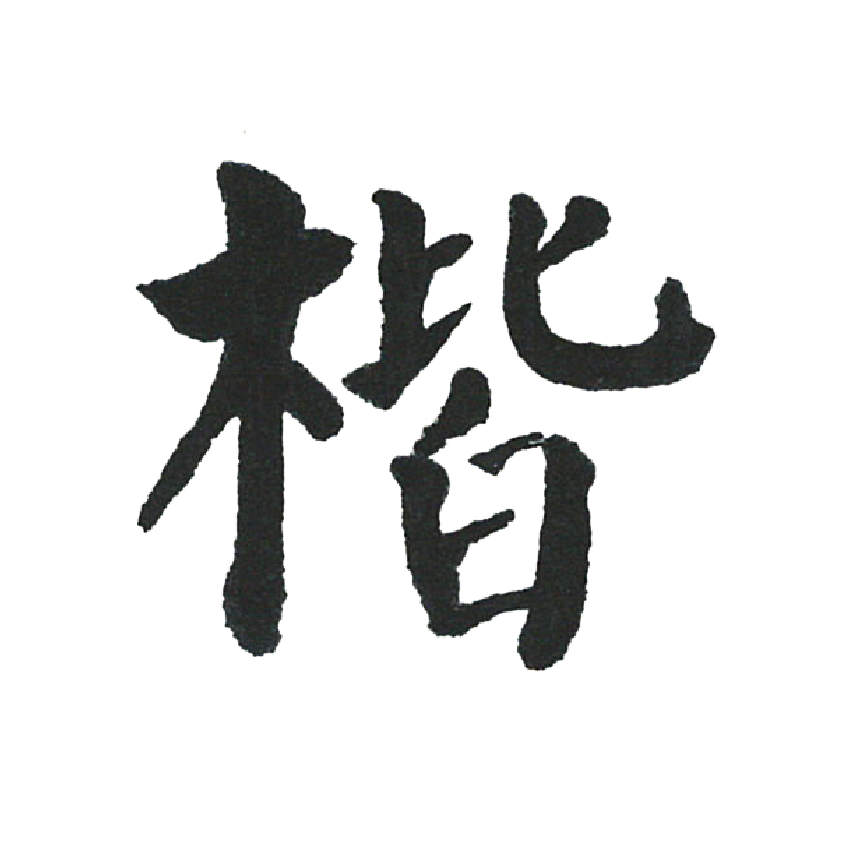
Regular Script
Regular script — also known as "true script" or "standard script" — evolved from clerical script. Its invention is traditionally credited to Zhong You, a senior official of the Wei kingdom during the Three Kingdoms period, who was later honored as the "Father of Regular Script." In its early stages, regular script retained many of the techniques of clerical script.
The script reached maturity at the height of the Tang dynasty, giving rise to the "Tang emphasis on rules" and a line of renowned calligraphers: Ouyang Xun, Yu Shinan, Chu Suiliang, Yan Zhenqing, and Liu Gongquan.
With its square and practical letterforms, regular script remains beloved today — the computer fonts we use every day are built upon its structural framework.
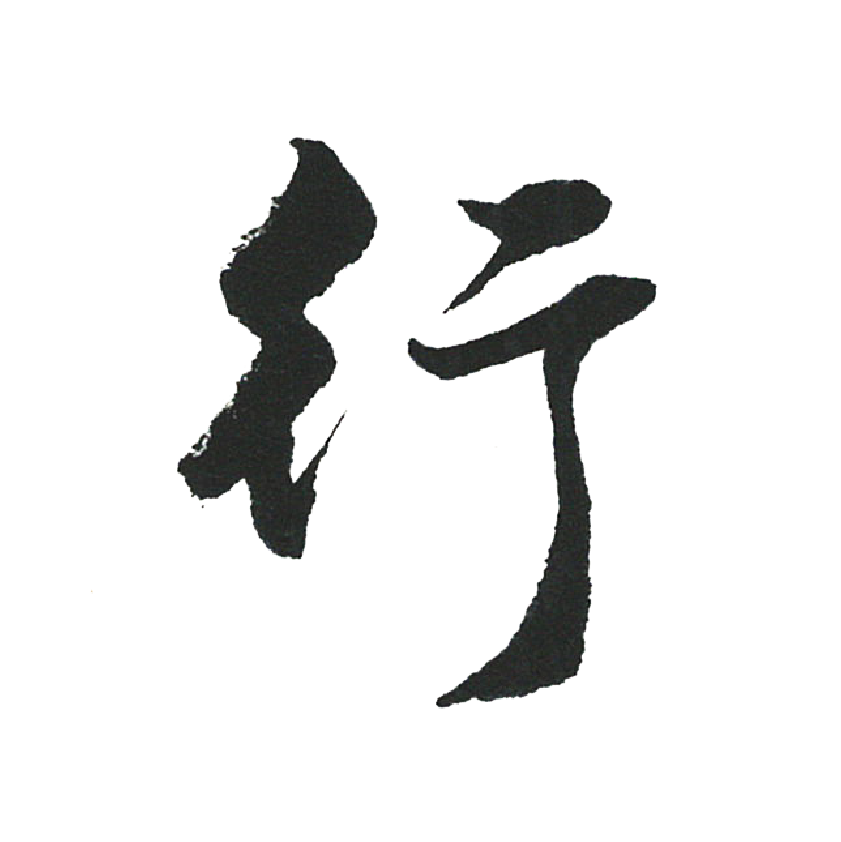
Running Script
Running script is traditionally credited to Liu Desheng of the Eastern Han dynasty. In the Jin dynasty, Wang Xizhi's "Preface to the Orchid Pavilion" earned the title of "the finest running script under heaven." Generations later, in the late Tang, Yan Zhenqing emerged as the next great calligrapher after Wang Xizhi, and his "Draft of a Requiem to My Nephew" is known as "the second-finest running script under heaven." For centuries these works have drawn admiration and imitation, serving as a shared language for calligraphy lovers everywhere.
Running script sits between regular and cursive script. Its hallmark is linked, simplified strokes that remain readable — quick to write and easy to understand, and therefore well suited to the flow of information. It is both practical and highly artistic, its characters moving across the page like drifting clouds and flowing water.
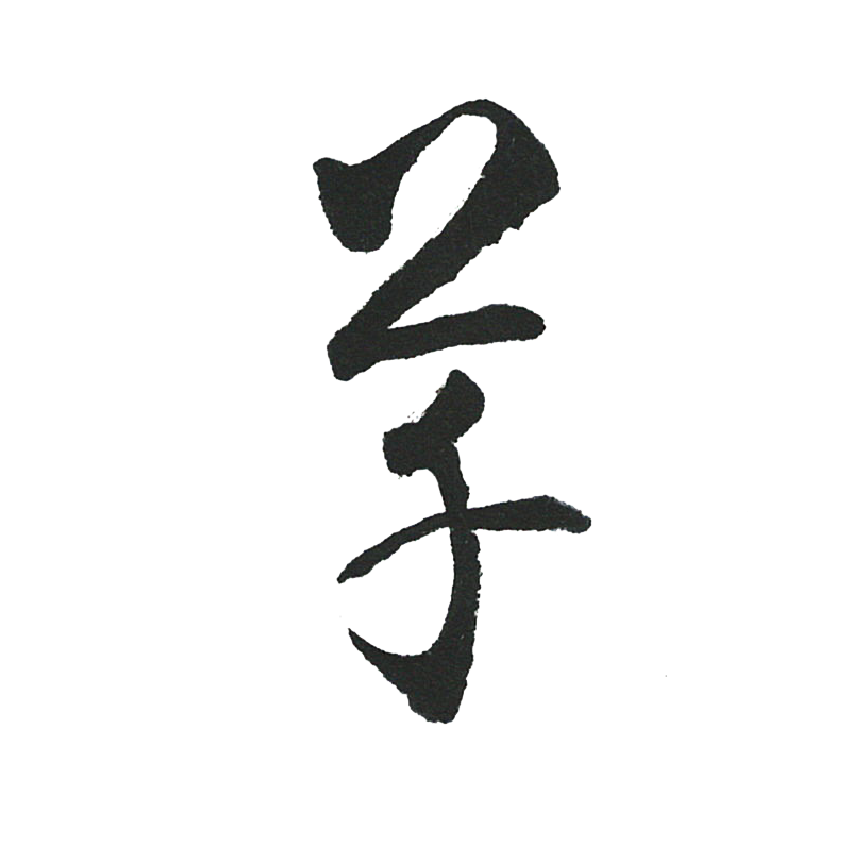
Cursive Script
Cursive script is sweeping and unrestrained, giving full expression to the calligrapher's emotions. It appeared in the Eastern Han dynasty and is traditionally credited to Zhang Zhi, the "Sage of Cursive," and it was later championed by Wang Xizhi and his son in the Eastern Jin. It flourished once again in the Tang dynasty, when still more styles emerged. Other notable cursive masters include Huaisu and Zhang Xu.
Cursive script comes in three forms: Zhangcao (classical cursive), Jincao (modern cursive), and Kuangcao (wild cursive). Classical cursive keeps characters independent; modern cursive links strokes fluidly, balancing strength and softness; and wild cursive is the most unrestrained of all, with dramatic transformations and exuberant, flowing strokes.
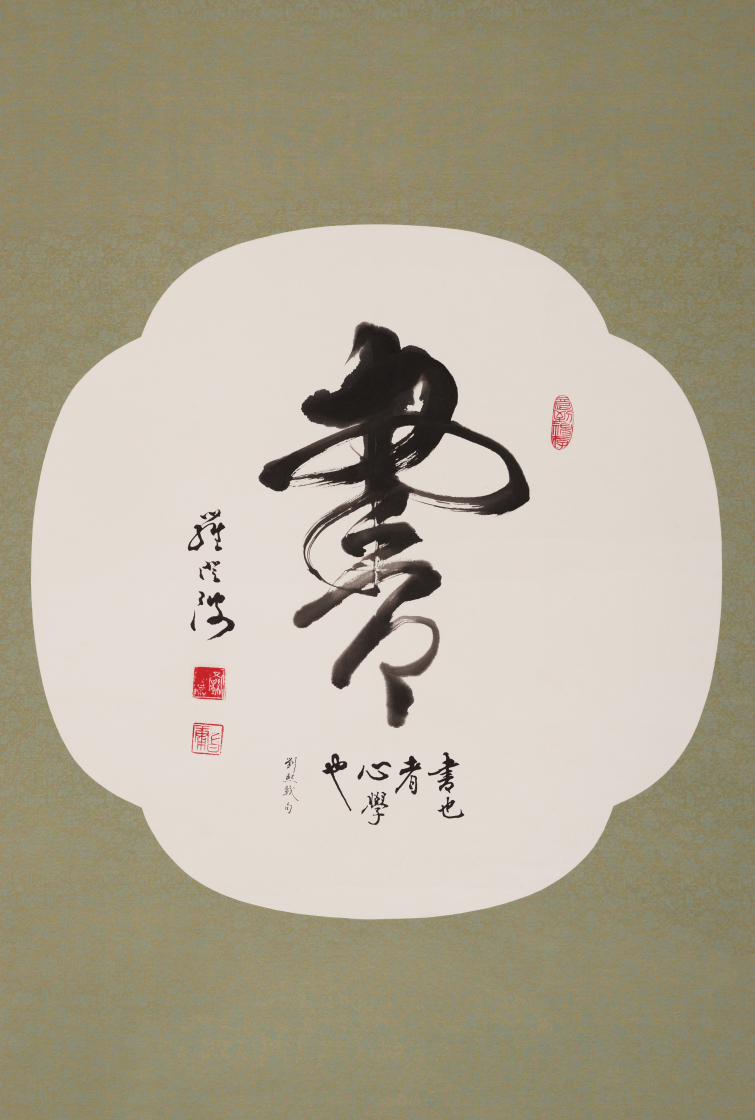
Cursive script commands the page with its momentum — wild and free — allowing viewers to feel the calligrapher's state of mind in the very moment of writing. It has little practical use today, but from an artistic standpoint it reveals something essential: a calligrapher must first master technique and principle before creating freely, achieving balanced composition and order within apparent chaos.