
Zhong Yong Grid
The "Zhong Yong Grid" was created by Principal Law Ching Bor (courtesy name Zhongyong) and was registered in Hong Kong in 2000, with later registrations in Taiwan and mainland China.
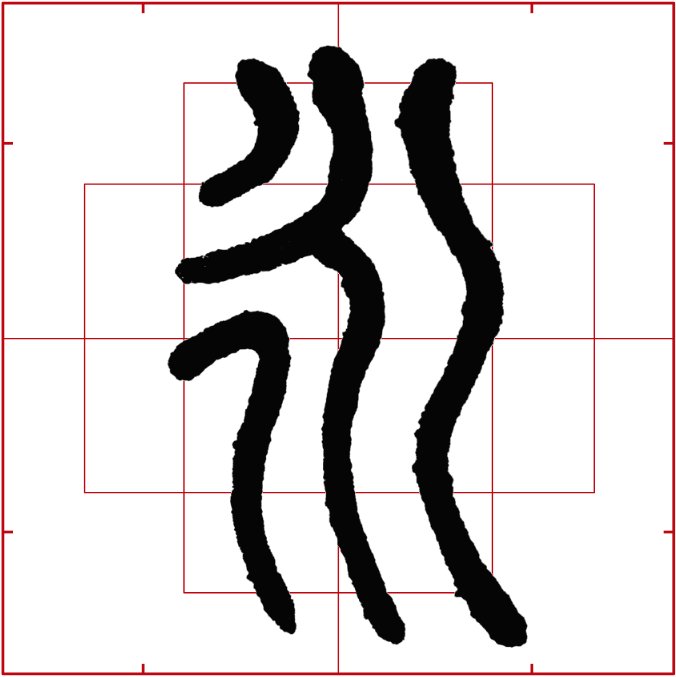
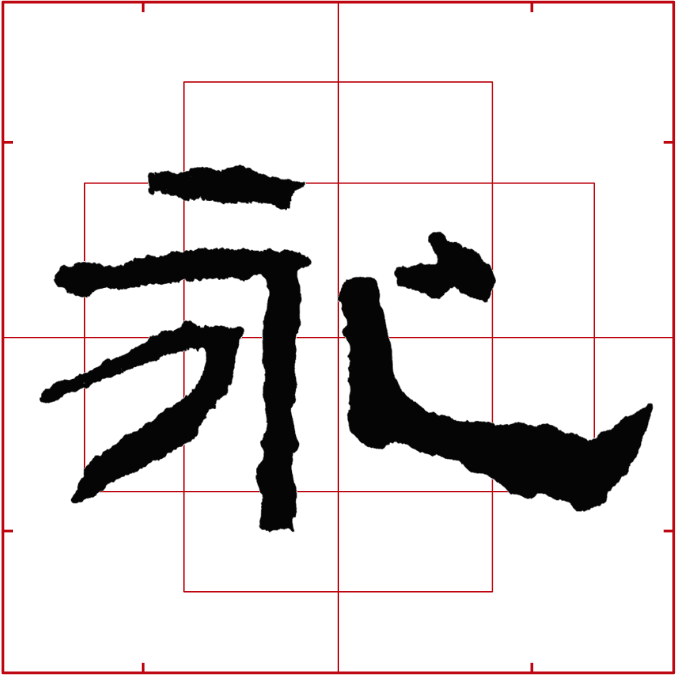
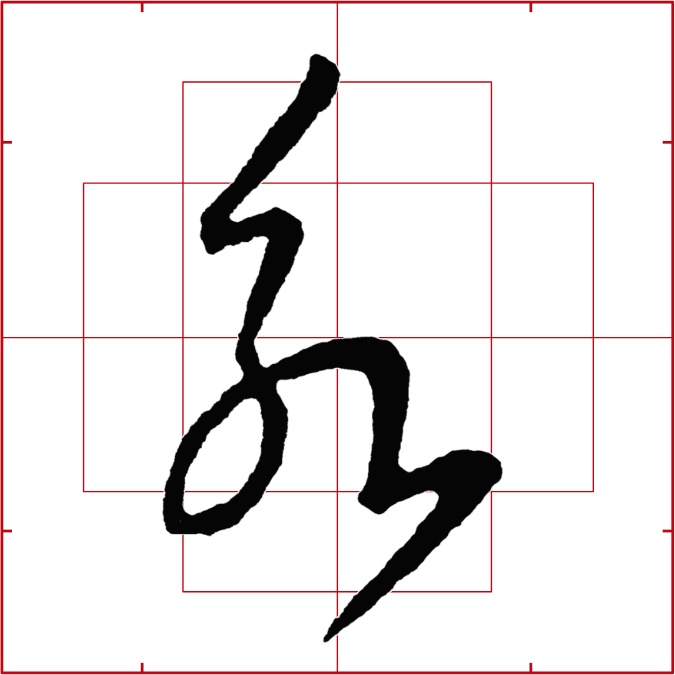
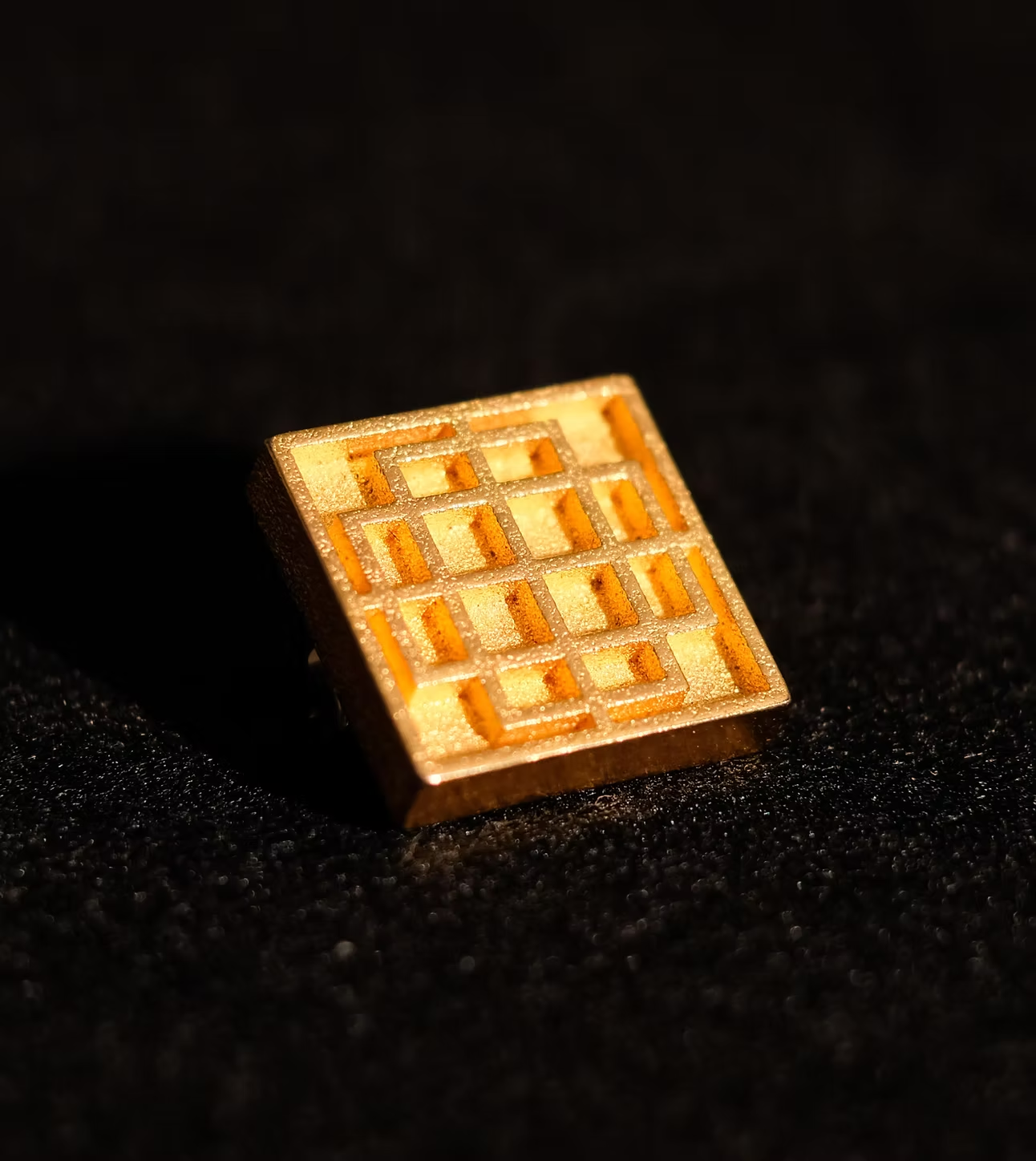
The grid places two identical "中" (zhong, meaning "center") characters overlapping within a square frame. Writing within it creates a uniform, symmetrical, and harmonious visual space that matches the natural habits of human vision and reflects the "Psychogeometric Theory of Chinese Character Writing." The inner lines follow the aesthetic principle of the golden mean and shift into different geometric patterns for each script, while also echoing the Chinese philosophy of "Zhongyong" — the Doctrine of the Mean. This is where the name comes from: the Zhong Yong Grid.
Traditional Concepts
Chinese characters are square in form. Seal script tends toward tall rectangles; clerical script is flat and broad, like a turtle's shell; regular script mixes tall and square forms; and running and cursive scripts vary widely, demanding balance and fine coordination.
For generations, most learners have relied on the traditional "Nine-Palace Grid" or "Rice-Character Grid" to guide their copying. However, these grids make it difficult to grasp character structure, they do not adapt well across scripts, and characters tend to wander off the central axis into loose shapes. As a result, learners need long hours of practice to achieve good results.
Faithful to Rules, Yet Innovative
The Zhong Yong Grid was built upon the structure of Chinese characters and designed around the needs of different scripts and model copybooks, resulting in a new and scientifically grounded format for copying. Two identical "中" characters overlap to form a central axis, while points on the inner frame quietly indicate angles and directions. With it, learners grasp character structure more easily, copy more effectively, and keep every stroke connected to the whole.
The grid's ever-changing geometric patterns are grounded in the psychogeometric theory of Chinese character writing. Learners see immediate results in mastering a character's shape, structure, and composition, and the grid delivers striking gains in visual skills — balance within slant, straightness within curves, uniform symmetry, and proportion — dramatically shortening the time it takes to learn calligraphy: half the effort, twice the results.